
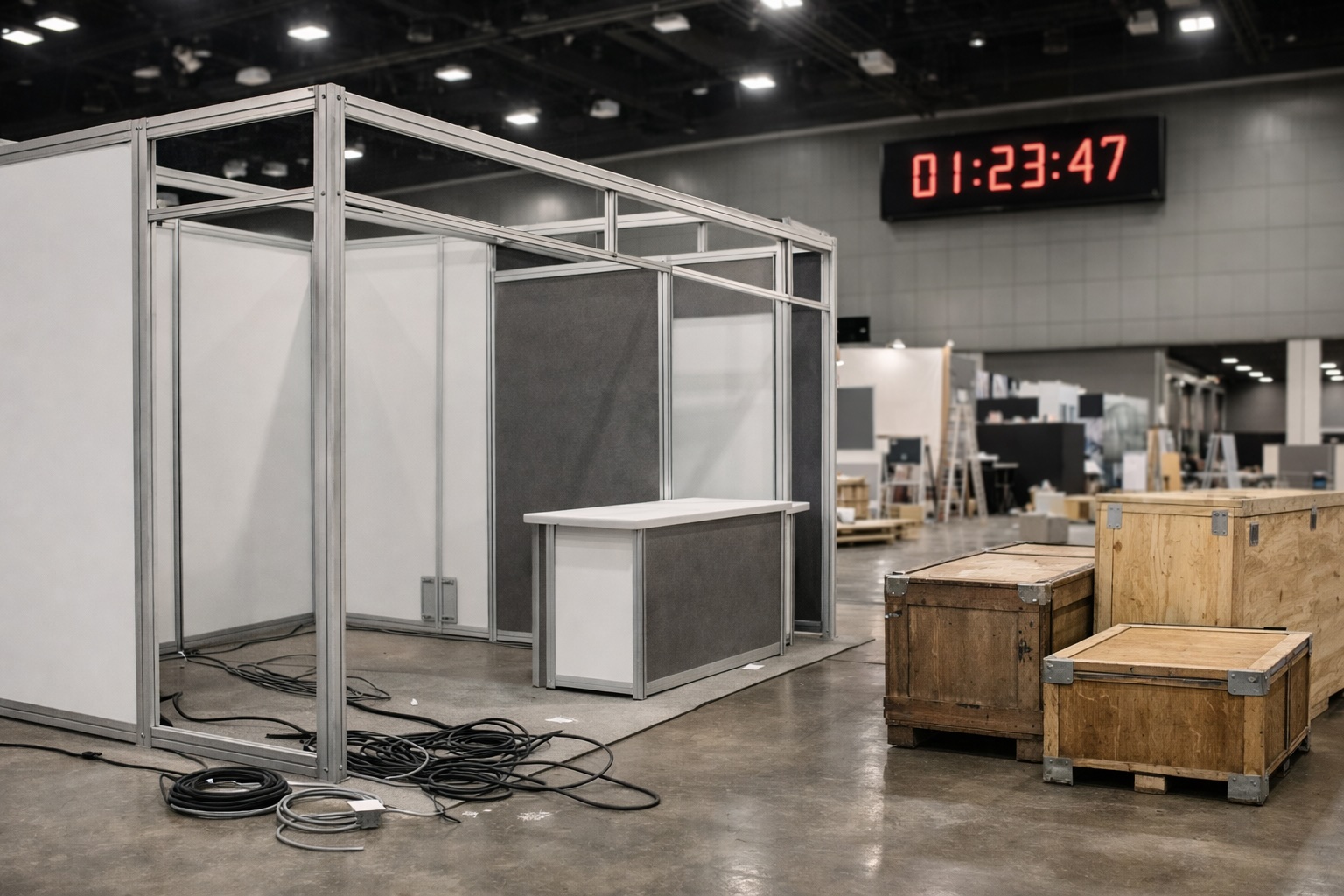
Trade shows operate on fixed deadlines, tight logistics, and high expectations. When booth planning is rushed, small decisions can quickly turn into expensive mistakes. Many exhibitors underestimate how a compressed timeline impacts cost, quality, and overall performance on the show floor.
Why Trade Show Booth Timelines Matter More Than Most Expect
Trade show booths are not off the shelf products. They involve design development, fabrication, logistics coordination, and installation planning. Each stage relies on the one before it.
When timelines are shortened, teams are forced to make decisions quickly, often without the ability to explore better options. This increases risk and limits flexibility, especially as show dates approach.
The Most Common Mistakes Caused by Rushing
One of the first issues is limited design refinement. Rushed booths often rely on generic layouts or reused concepts that fail to align with brand goals. Custom elements may be simplified or removed entirely to meet deadlines.
Material substitutions are another common issue. When preferred materials are unavailable within a short window, fabricators must use alternatives that may impact durability or appearance.
Shipping and logistics problems also increase. Expedited freight costs rise sharply, and tight delivery windows leave little room for error. A single delay can jeopardize on time installation.
How Rushed Booths Increase Costs
Many exhibitors assume rushing saves money by skipping planning time. In reality, the opposite is true. Expedited fabrication, rush labor, and premium shipping all drive costs higher.
Last minute changes are especially expensive. Adjustments made late in the process often require rework rather than simple revisions, compounding both cost and stress.
The Impact on On Site Performance
A rushed booth does not just affect appearance. Poor layout planning can limit staff movement, reduce engagement opportunities, and create bottlenecks during busy show hours.
Technical issues such as improper lighting placement, insufficient power planning, or awkward storage access often surface during installation when it is too late to correct them.
How Early Planning Prevents These Issues
Starting early allows time for strategic design decisions, value engineering, and coordination with show organizers. It also opens opportunities to optimize layouts based on attendee flow and lead capture goals.
With proper lead time, exhibitors can test ideas, refine messaging, and ensure the booth supports both brand visibility and team performance.
Final Takeaway
Rushing a trade show booth almost always costs more and delivers less. Early planning protects budgets, reduces risk, and ensures the booth performs as intended on the show floor.
A successful trade show presence is built long before the event doors open. The sooner planning begins, the smoother the entire process becomes.